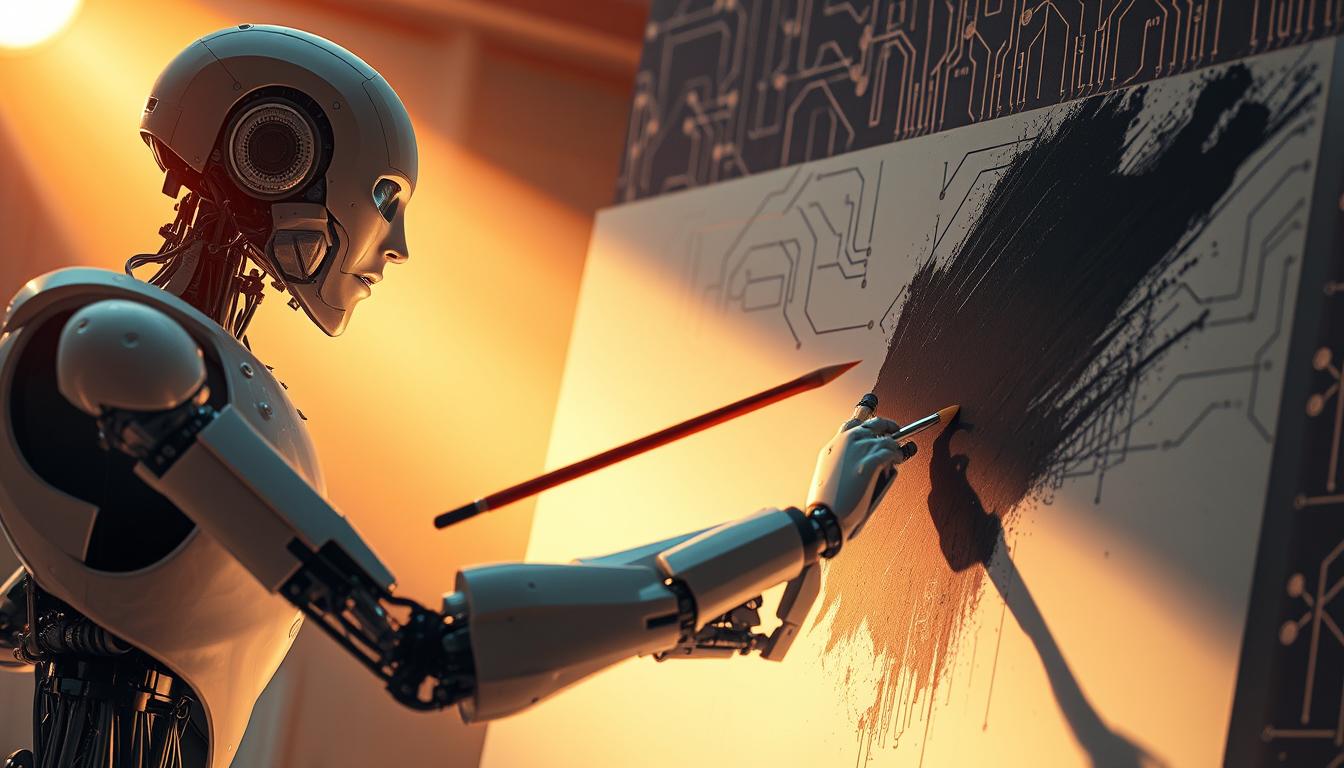
The fusion of technology and art has given rise to a fascinating field: robot drawing. This innovative area combines machine learning artwork and tech-inspired sketches to create unique pieces that showcase the capabilities of ai and robotics art.
As machines become increasingly sophisticated, they are being used to generate art that is not only aesthetically pleasing but also thought-provoking. The intersection of art and technology has opened up new avenues for creative expression, allowing artists to push the boundaries of what is possible.
Key Takeaways
- The fusion of technology and art has given rise to robot drawing.
- Machine learning artwork and tech-inspired sketches are key components of this field.
- AI and robotics art are being used to create unique and thought-provoking pieces.
- The intersection of art and technology has opened up new avenues for creative expression.
- Robot drawing is a rapidly evolving field with vast potential.
The Evolution of Robot Drawing in Modern Art
The integration of robotics in art has revolutionized the way we perceive creativity, transforming robot drawing into a tangible reality. This evolution has not only expanded the boundaries of art but has also introduced new forms of creative expression.
From Science Fiction to Reality
The concept of robots creating art was once confined to science fiction. However, with advancements in machine learning in art and digital art, robot illustration has become a reality. Robots are now capable of producing intricate drawings that rival those created by humans. This transition from fiction to reality has been facilitated by creative technology, enabling artists to explore new mediums and techniques.
As robots become more sophisticated, their ability to create art has improved significantly. The use of algorithms and machine learning techniques allows robots to learn from data and generate art that is not only aesthetically pleasing but also innovative.
Key Milestones in Robotic Art History
The history of robotic art is marked by several key milestones. One of the earliest examples is the use of robotic arms in the 1960s for creating art. Since then, there have been numerous advancements, including the development of autonomous robots that can create art without human intervention.
Recent years have seen the rise of robotics in art exhibitions and installations, showcasing the capabilities of robots in creating complex and interactive art pieces. These developments have positioned robotic art as a significant component of modern art, pushing the boundaries of what is possible in the creative world.
Understanding the Intersection of AI and Artistic Expression
The integration of artificial intelligence in art has sparked a new wave of creativity, transforming the way we perceive and interact with artistic expressions. As AI technologies continue to advance, they are increasingly being used to generate art, challenge traditional notions of creativity, and collaborate with human artists.
How Artificial Intelligence Interprets Creativity
Artificial intelligence interprets creativity through complex algorithms that analyze vast amounts of data, including existing artworks, styles, and techniques. By doing so, AI systems can generate new pieces that reflect the patterns and characteristics of the data they were trained on. This process raises interesting questions about the nature of creativity and whether machines can truly be creative.
As AI-generated art gains recognition, it challenges our understanding of creativity and the role of the artist. While some argue that AI lacks the emotional and intuitive aspects of human creativity, others see AI as a tool that can augment human imagination and push the boundaries of artistic expression.
Machine Learning as an Artistic Tool
Machine learning is a key component of AI-generated art, enabling robots and computer systems to learn from data and improve their artistic capabilities over time. By applying machine learning algorithms to artistic tasks, such as painting, drawing, or composing music, AI systems can create complex and innovative artworks that rival those produced by humans.
The use of machine learning as an artistic tool also opens up new possibilities for collaboration between humans and machines. Artists can work alongside AI systems to generate new ideas, explore different styles, and create artworks that blend human and machine creativity.
Robot Drawing: Bringing AI and Robotics to Life Through Art
The emergence of robot art signifies a pivotal shift in how we perceive creativity and artistic expression. As machines become increasingly capable of creating art, we’re forced to reevaluate the role of the artist and the nature of creativity itself.
Defining the Robot Art Movement
The robot art movement is characterized by the use of robots and artificial intelligence to create art. This movement challenges traditional notions of art and creativity, raising questions about authorship and the role of the machine in the creative process.
Key aspects of the robot art movement include:
- The use of AI algorithms to generate art
- The integration of robotics in the creative process
- A redefinition of the artist’s role in the age of machines
Notable Artists and Their Robotic Creations
Several artists have made significant contributions to the robot art movement. For instance, Patrick Tresset, known for his robotic installations that explore human-robot interaction, has created works that are both aesthetically pleasing and thought-provoking.
Another notable artist is Jordan Wolfson, whose AI-generated art challenges our perceptions of reality and creativity.
Case Study: Pioneering Robot Artists
A pioneering example of robot art is the work by Aaron Krause, who has developed robots that can paint and create art autonomously. Krause’s work not only showcases the technical capabilities of robots but also highlights the potential for machines to be creative.
This case study demonstrates how robot art is pushing the boundaries of what we consider “art” and expanding our understanding of creativity.
Technologies Behind Robotic Art Creation
The technologies behind robotic art are diverse, ranging from mechanical components to complex algorithms. Robotic art creation involves a sophisticated interplay between hardware and software, enabling machines to produce intricate and aesthetically pleasing works.
Hardware Components for Drawing Robots
Drawing robots rely on precise hardware components to execute their artistic functions. Key hardware elements include servo motors, which provide the necessary precision for movements, and high-resolution sensors, which allow the robot to detect and respond to its environment. The mechanical arms or drawing tools are designed to mimic human-like movements, creating a range of artistic effects.

The quality of the hardware directly impacts the robot’s ability to create detailed and nuanced art. For instance, advanced robotic arms can vary pressure and speed, allowing for a range of strokes and textures in the artwork.
Software and Algorithms That Drive Artistic Robots
The software and algorithms used in robotic art are equally crucial, as they determine the creative output of the machine. Machine learning algorithms enable robots to learn from data and improve their artistic capabilities over time. These algorithms can analyze vast amounts of artistic styles and techniques, allowing the robot to generate original works based on its programming.
Moreover, the integration of digital art software with robotic hardware enables the creation of complex and innovative art forms. This fusion of technology and art opens up new possibilities for artistic expression and creativity.
By combining advanced hardware with sophisticated software, robotic art creation pushes the boundaries of what is possible in the art world, blending technology and creativity in innovative ways.
Getting Started with Robot Drawing: Tools and Techniques
For those interested in exploring the intersection of robotics and art, getting started with robot drawing can be both thrilling and intimidating. The good news is that numerous resources are available to help beginners dive into this exciting field.
Accessible Platforms for Beginners
Several platforms make it easy for newcomers to start their robot drawing journey. Arduino and Raspberry Pi are popular choices among hobbyists due to their versatility and the extensive community support they offer. These platforms provide a solid foundation for learning the basics of robotics and programming.
For those more inclined towards software, creative coding environments like Processing and OpenFrameworks are excellent starting points. They offer a range of libraries and examples that can be used to control robots and create art.
DIY Robot Drawing Projects
Engaging in DIY projects is a great way to gain hands-on experience with robot drawing. Simple projects, such as building a robotic arm or creating a drawing machine, can be both fun and educational. Online tutorials and kits can guide you through these projects, helping you understand the mechanics and programming involved.
A notable example is the Makeblock mBot, a robot kit designed for educational purposes. It allows users to build and program their robots using a visual programming language, making it an ideal tool for learning robot drawing techniques.
Resources and Communities
Joining online communities and forums can provide valuable insights and support. Websites like Instructables and GitHub host a variety of robot drawing projects and code repositories. Participating in these communities not only enhances your knowledge but also connects you with like-minded individuals.
“The best way to get started is to quit talking and begin doing.” – Walt Disney
By leveraging these resources and engaging with the community, you can accelerate your learning and stay updated on the latest trends in robot drawing.
Artistic Depictions of Robots and AI in Contemporary Art
In the realm of contemporary art, robots and AI are not just tools but are being reimagined as artistic expressions themselves. This shift has led to a fascinating exploration of technology’s role in creative processes.
Robots as Artistic Subjects
Robots have become intriguing subjects in contemporary art, symbolizing the intersection of technology and humanity. Artists use robots to explore themes of innovation, interaction, and the future of human-robot collaboration.
Some notable artists have created works that feature robots as central figures, often highlighting their potential to evoke emotions and challenge perceptions. For instance, robotic installations that mimic human-like movements or expressions can create a sense of empathy or unease, depending on the context.
Symbolism and Meaning in Robot Illustrations
Robot illustrations often carry symbolic meanings that reflect societal attitudes towards technology. These artworks can range from optimistic portrayals of robots as helpers to dystopian visions of machines overtaking human roles.
The symbolism in robot art can be complex, involving themes such as creativity, consciousness, and the ethics of artificial intelligence. By examining these illustrations, viewers can gain insights into the cultural significance of robots and AI in our society.
| Symbolism | Meaning | Artistic Representation |
|---|---|---|
| Creativity | Exploring the potential of AI in art | Robots creating art |
| Consciousness | Questioning the nature of machine intelligence | Humanoid robots with human-like expressions |
| Ethics | Debating the role of AI in society | Dystopian robot illustrations |
By analyzing these artistic depictions, we can better understand the multifaceted relationship between humans, robots, and AI, and how it is evolving in contemporary art.
Experiencing Robot Art: Exhibitions and Installations
From interactive installations to futuristic artwork, robot art exhibitions are redefining the boundaries of art and technology. These exhibitions offer a unique opportunity for audiences to engage with the creative potential of robots and AI.
Notable Galleries and Museums Featuring Robot Art
Several prominent galleries and museums have embraced robot art, showcasing innovative works that blend technology and creativity. For instance, the ZKM Center for Art and Media Karlsruhe has hosted exhibitions featuring robotic installations that explore the intersection of art and technology. Similarly, the Museum of Modern Art (MoMA) in New York has included robot art in its collections, highlighting the growing significance of robotic creativity in modern art.
Interactive Robot Art Experiences
Interactive robot art experiences are revolutionizing the way audiences engage with art. These installations often allow viewers to participate in the creative process, generating art in real-time through algorithms and robotic mechanisms. For example, the robotic art installation “Machine Learning” enables visitors to influence the artwork through their interactions, creating a dynamic and immersive experience.
The Future of Human-Robot Collaboration in Art
The future of art is being shaped by the emerging partnership between human creativity and robotic precision. This collaboration is not only enhancing the artistic process but also opening up new avenues for creative expression.
Emerging Technologies and Techniques
Advancements in AI and robotics are driving innovation in the art world. Techniques such as machine learning and computer vision are being used to create sophisticated robotic systems capable of generating complex artworks. For instance, robots can now analyze and replicate the brushstrokes of famous paintings, creating new pieces that echo the style of the masters.
Key emerging technologies include:
- Generative adversarial networks (GANs) for creating novel art forms
- Collaborative robots (cobots) designed to work alongside human artists
- Advanced computer vision systems that enable robots to understand and interpret visual data

Ethical Considerations and Creative Ownership
As robots become more integral to the creative process, questions about creative ownership and authorship arise. Who owns a work of art created by a robot: the robot, the programmer, or the machine’s AI? These ethical considerations are crucial as they impact the art world’s perception and valuation of robot-generated art.
The art community is grappling with these issues, seeking to establish clear guidelines that balance the creative contributions of both humans and robots. Ensuring transparency about the role of robots in art creation is essential for maintaining the integrity of the artistic process.
Conclusion: The Artistic Soul of Machines
The fusion of technology and art has given rise to a new era of creative expression, where machines are not just tools, but collaborators in the artistic process. As we’ve explored the world of robot drawing, it’s clear that the intersection of AI, robotics, and art is yielding innovative and thought-provoking results.
The artistic soul of machines is a concept that challenges our traditional understanding of creativity and artistic expression. By embracing the capabilities of robots and AI, artists can push the boundaries of their craft, exploring new techniques and mediums that were previously unimaginable.
As we look to the future of robotics, it’s evident that the collaboration between humans and machines will continue to shape the art world. The ai and robotics art summary is one of innovation and experimentation, where technology meets creativity in exciting and unpredictable ways.
The robot drawing conclusion is that machines are not replacing human artists, but rather augmenting their abilities and opening up new possibilities for artistic expression. As we move forward, it’s clear that the future of robotics will be shaped by the intersection of technology and art.
FAQ
What is robot drawing, and how does it work?
Robot drawing refers to the use of robots and artificial intelligence to create art. It works by combining hardware components, such as robotic arms, with software and algorithms that enable the robot to generate artistic creations.
What is the role of AI in robot drawing?
AI plays a crucial role in robot drawing by interpreting creativity and enabling machines to create art. Machine learning algorithms allow robots to learn from data and generate new artistic expressions.
Can I get started with robot drawing without prior experience?
Yes, there are accessible platforms and DIY projects that can help beginners get started with robot drawing. Resources and communities are also available to provide guidance and inspiration.
What are some notable examples of robot art?
Notable examples include works by pioneering robot artists who have made significant contributions to the field. These artists have showcased the potential of robot drawing in redefining the boundaries of art and technology.
How is robot art experienced in exhibitions and installations?
Robot art is experienced through exhibitions and installations in notable galleries and museums, as well as interactive experiences that engage audiences in new and innovative ways.
What are the emerging technologies and techniques in human-robot collaboration in art?
Emerging technologies, such as advancements in machine learning and robotics, are shaping the future of human-robot collaboration in art. These developments raise important questions about creative ownership and ethical considerations.
How does machine learning contribute to artistic expression in robot drawing?
Machine learning enables robots to learn from data and generate new artistic expressions, enhancing the creative possibilities in robot drawing.
What is the significance of robot drawing in modern art?
Robot drawing is significant in modern art as it brings AI and robotics to life through art, redefining the boundaries of creativity and technology.


