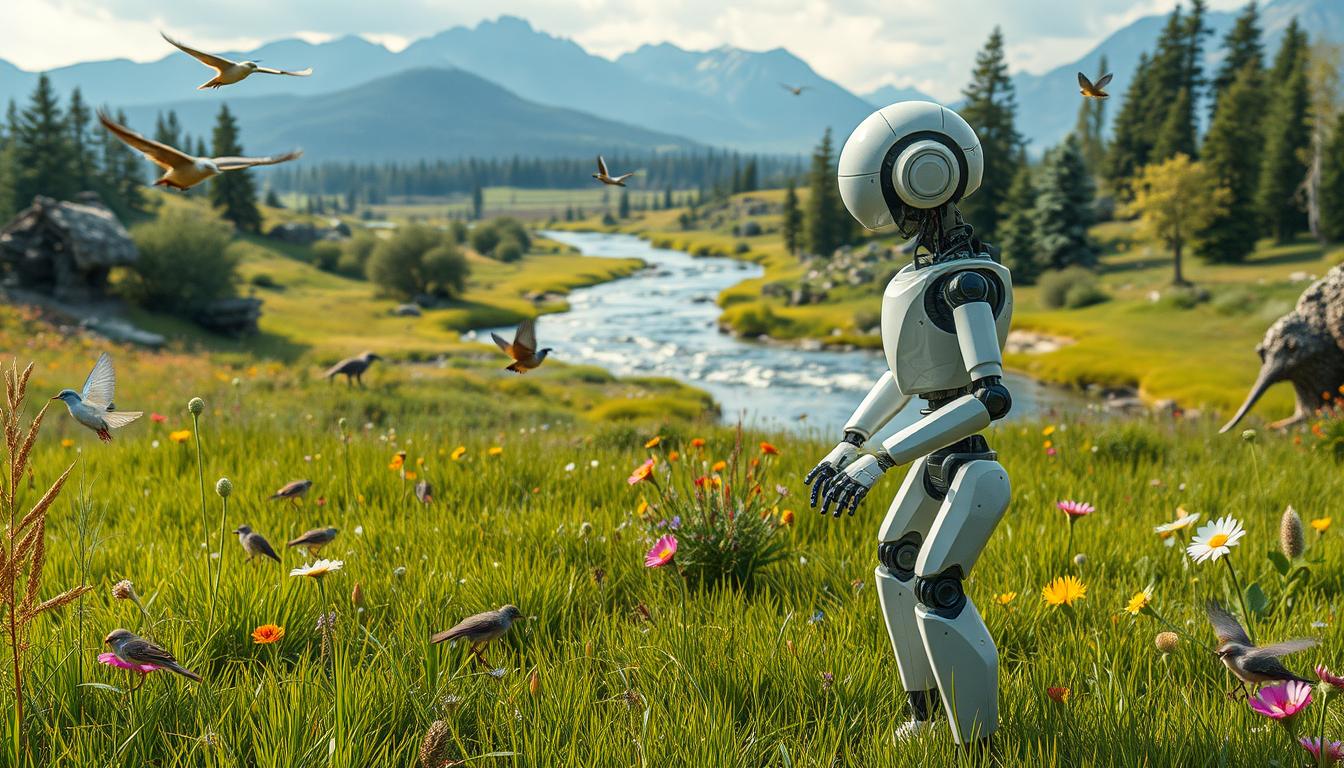
Nature has always been a source of inspiration for technological advancements. The concept of Ponas Robotas draws heavily from the natural world, applying its principles to robotics, AI, and machine learning. By studying the adaptability and efficiency of biological systems, researchers can develop more sophisticated robotic systems.
This intersection of technology and biology is revolutionizing the field, enabling the creation of robots that can learn, adapt, and interact with their environment in more complex ways. As a result, AI tutorials and robotics lessons are becoming increasingly important for those looking to stay at the forefront of these developments.
Key Takeaways
- Understanding the principles of Ponas Robotas and its application in robotics and AI.
- The significance of nature-inspired technological advancements.
- The role of AI tutorials in developing expertise in machine learning and robotics.
- The potential of robotics to adapt and learn from their environment.
- The growing importance of interdisciplinary approaches in technology and biology.
The Convergence of Technology and Biology
The intersection of technology and biology is giving rise to a new era of nature-inspired robotics. This convergence is not merely about applying biological principles to technological design; it’s about creating a symbiotic relationship between the two fields.
Understanding Biomimicry in Modern Technology
Biomimicry, or the practice of drawing inspiration from nature, is transforming the way we approach technological innovation. By studying the adaptations and strategies that have evolved in the natural world, scientists and engineers can develop more efficient, resilient, and adaptive technologies.
This approach has led to significant advancements in various fields, including robotics, where designs inspired by animals and plants are enhancing performance and capabilities.
The Birth of Ponas Robotas Philosophy
The philosophy behind Ponas Robotas is rooted in the belief that nature provides the perfect blueprint for technological innovation. By emulating the strategies and adaptations found in the natural world, Ponas Robotas aims to push the boundaries of what is possible in robotics and artificial intelligence.
Why Nature Provides the Perfect Blueprint
Nature, through millions of years of evolution, has developed solutions to complex problems that often surpass human ingenuity. By studying these natural solutions, researchers can gain insights into novel approaches for technological challenges.
This nature-inspired approach not only fosters innovation but also promotes sustainability and efficiency in technological design.
Ponas Robotas: Lessons in Robotics, AI, and Machine Learning from Nature
By studying the natural world, scientists and engineers can uncover innovative solutions for robotics and machine learning. The natural world is replete with examples of efficient, adaptive, and resilient systems that can inspire technological innovation.
The Core Principles of Nature-Inspired Design
Nature-inspired design, or biomimicry, involves understanding and applying principles from nature to solve human problems. In robotics, this means looking at how animals move, adapt, and interact with their environments to develop more efficient and capable robots.
Key principles include adaptability, resilience, and efficiency, all of which are crucial for creating robots that can operate in complex and dynamic environments.
How Natural Systems Inform Technological Innovation
Natural systems have evolved over millions of years to optimize their functions, whether it’s the flight patterns of birds or the swimming techniques of fish. By studying these systems, researchers can develop new technologies that mimic these efficient processes.
For instance, the study of insect flight has led to the development of more agile and maneuverable drones. Similarly, understanding the fluid dynamics of aquatic creatures has inspired more efficient propulsion systems in underwater robots.
Key Learning Methodologies from Biological Systems
Biological systems offer several key learning methodologies, including the ability to adapt, self-heal, and learn from the environment. These methodologies can be applied to robotics through machine learning algorithms that enable robots to learn from their experiences and improve over time.
Adaptation is a critical aspect, allowing robots to adjust to new situations and environments. This can be achieved through advanced sensors and AI that enable robots to perceive and respond to their surroundings.
In conclusion, the study of nature and biological systems provides invaluable insights into the development of more advanced and capable robotics and AI systems. By applying the principles of nature-inspired design, we can create robots that are not only more efficient but also more adaptable and resilient.
Biomimetic Robotics: Learning from Animal Movement
By emulating the movements of animals, biomimetic robotics achieves unprecedented levels of efficiency and adaptability. This field combines robotics lessons from nature with AI advancements to create more sophisticated robots.
Insect-Inspired Locomotion Systems
Insects like ants and cockroaches have inspired robots that can navigate complex terrains. Their ability to adapt to different environments has led to significant robotics innovations.
Boston Dynamics’ SpotMini and Ant Biomechanics
Boston Dynamics’ SpotMini robot is a prime example of biomimetic design, drawing inspiration from the agility and balance of animals like ants. This robot’s ability to navigate challenging environments is a direct result of studying ant biomechanics.
Aquatic Creatures and Fluid Dynamics
Aquatic animals, such as fish and dolphins, have evolved efficient propulsion mechanisms. These biological systems inform the design of underwater robots, enhancing their maneuverability and energy efficiency.
Robotic Fish and Underwater Exploration
Robotic fish are being developed for underwater exploration, utilizing machine learning algorithms to mimic the fluid dynamics of real fish. This biomimetic approach enables more effective underwater missions.
Avian Flight Mechanics in Drone Technology
The study of bird flight has significantly impacted drone technology. By understanding the aerodynamics of avian flight, engineers can design drones that are more agile and efficient.
The integration of robotics and biomimetics is opening new avenues in AI advancements and machine learning, pushing the boundaries of what robots can achieve.
Neural Networks and the Human Brain
By mimicking the brain’s neural networks, researchers have made substantial progress in developing more sophisticated AI systems. The human brain’s complex neural structure has been a long-standing source of inspiration for artificial intelligence (AI) and machine learning (ML) advancements.
How Neurons Inspired Artificial Neural Networks
The brain’s neurons and their synaptic connections form the basis of artificial neural networks (ANNs). ANNs are designed to replicate the brain’s ability to process complex information, recognize patterns, and make decisions based on that information. This biological inspiration has led to significant breakthroughs in machine learning algorithms, enabling AI systems to learn from data and improve over time.

Deep Learning’s Biological Foundations
Deep learning, a subset of ML, draws heavily from the brain’s layered processing structure. The multiple layers in deep learning models are reminiscent of the brain’s hierarchical processing, where early layers detect simple features and later layers interpret more complex patterns. This architecture has been pivotal in achieving state-of-the-art results in various AI applications, providing valuable artificial intelligence insights.
Cognitive Processing Models in AI
Cognitive processing models in AI aim to simulate human thought processes, incorporating aspects of memory, attention, and decision-making. These models are crucial for developing AI systems that can interact more naturally with humans and adapt to new situations.
Memory Formation and Retrieval Systems
Memory formation and retrieval are essential components of both biological and artificial cognitive systems. In AI, memory mechanisms are designed to store and retrieve information efficiently, much like the human brain. This capability is vital for AI systems to learn from past experiences and apply that knowledge to future tasks, leveraging ai algorithms to enhance performance.
| Biological Component | Artificial Intelligence Equivalent | Functionality |
|---|---|---|
| Neurons | Artificial Neural Networks | Pattern recognition and decision-making |
| Synaptic Plasticity | Learning Algorithms | Adaptation and learning |
| Memory Formation | Memory Mechanisms in AI | Information storage and retrieval |
Evolutionary Algorithms: Nature’s Optimization Strategy
Evolutionary algorithms represent a significant advancement in machine learning applications by leveraging natural selection and genetics. These algorithms are designed to optimize solutions to complex problems by iteratively improving a population of candidate solutions.
Genetic Algorithms and Natural Selection
Genetic algorithms are a type of evolutionary algorithm inspired by the process of natural selection. They use principles of mutation, crossover, and selection to evolve better solutions over time. This process mirrors the natural evolution seen in biological systems, where species adapt and evolve to survive in their environments.
Swarm Intelligence and Collective Behavior
Swarm intelligence is another facet of evolutionary algorithms, drawing inspiration from the collective behavior of biological systems like flocks of birds or schools of fish. These algorithms exploit the decentralized, self-organized behavior of such systems to solve complex problems.
Ant Colony Optimization in Logistics
A notable example of swarm intelligence is Ant Colony Optimization (ACO), which is used in logistics for route optimization. ACO algorithms simulate the foraging behavior of ants to find the most efficient paths between locations, such as in delivery routes or network routing.
Adaptation and Learning in Natural and Artificial Systems
Both genetic algorithms and swarm intelligence demonstrate how natural systems’ adaptation and learning capabilities can be replicated in artificial systems. This has significant implications for nature-inspired algorithms in various fields, including robotics education, where students can learn about complex systems through hands-on projects.
As stated by a renowned expert, “The survival of the fittest principle, observed in natural evolution, is a powerful tool for optimizing complex systems.” This principle is now being harnessed in various technological advancements.
“The best way to predict the future is to invent it.” – Alan Kay
In conclusion, evolutionary algorithms offer a robust optimization strategy by mimicking nature’s processes. Their applications in machine learning and robotics underscore the potential for continued innovation in these fields.
Sensory Systems: From Biology to Technology
The intricate sensory systems found in nature have long inspired technological innovations. By studying how biological systems process visual, auditory, and tactile information, scientists and engineers have developed advanced technologies that mimic these capabilities.
Visual Processing and Computer Vision
Biological visual systems, such as the human eye, have inspired significant advancements in computer vision. Computer vision technology enables machines to interpret and understand visual information from the world.
From Eagle Eyes to High-Resolution Cameras
Eagles, with their exceptionally sharp vision, have inspired the development of high-resolution cameras. These cameras can capture detailed images, much like the keen eyesight of eagles.
Auditory Systems and Speech Recognition
The human auditory system is incredibly sophisticated, capable of distinguishing a wide range of sounds. This has inspired speech recognition technology, which allows machines to understand and process human language.
Tactile Sensing and Haptic Feedback
Tactile sensing, or the ability to feel touch, is crucial for human interaction with the environment. This has led to the development of haptic feedback technology, used in various applications, including prosthetics.
Mimicking Human Touch in Prosthetics
Advances in haptic feedback have enabled the creation of prosthetics that can mimic the sensation of human touch, significantly improving the quality of life for individuals with prosthetic limbs.
As we continue to explore and understand biological sensory systems, we can expect even more innovative applications in robotics technology and artificial intelligence. The future of sensory technology looks bright, with potential advancements in ai tutorials and beyond.

Educational Applications of Nature-Inspired Robotics
Educators are increasingly turning to nature-inspired robotics to enhance learning experiences. By integrating biomimetic principles into the curriculum, students can engage with complex concepts in an interactive and meaningful way.
STEM Education Through Biomimetic Projects
Biomimetic projects offer a unique opportunity for students to explore STEM subjects through hands-on activities. For instance, designing robots that mimic the locomotion of insects or the flight of birds can teach students about robotics education and machine learning principles in an engaging context.
- Develops problem-solving skills through the design process
- Enhances understanding of biological and mechanical systems
- Fosters creativity and innovation
Interdisciplinary Learning Opportunities
Nature-inspired robotics naturally bridges disciplines, combining insights from biology, engineering, and computer science. This interdisciplinary approach can be particularly beneficial in AI tutorials, where students learn to apply algorithms inspired by natural systems.
Hands-on Workshops and Curriculum Development
Hands-on workshops are an effective way to introduce students to the principles of nature-inspired robotics. By developing curricula that incorporate these concepts, educators can provide students with a comprehensive understanding of robotics education and its applications.
Case Study: Ponas Robotas in the Classroom
A practical example of nature-inspired robotics in education is the use of Ponas Robotas in classroom settings. This approach has been shown to increase student engagement and understanding of complex technological concepts.
Self-Healing and Adaptive Materials in Robotics
Nature has long been a source of inspiration for robotics, particularly in the development of self-healing and adaptive materials. The integration of such materials into robotic systems enhances their durability and functionality, allowing them to recover from damage and adapt to new environments.
Biological Regeneration as a Model
Biological systems have evolved remarkable mechanisms for regeneration and healing. For instance, certain animals can regrow lost limbs, and plants can heal wounds through complex cellular processes. Robotics researchers are studying these biological regeneration processes to develop materials that can autonomously repair themselves.
Smart Materials in Robot Design
The use of smart materials in robotics enables the creation of robots that can change their properties in response to environmental stimuli. These materials can be engineered to be self-healing, thus improving the robot’s resilience.
Self-Repairing Circuits and Structures
One of the significant advancements in this area is the development of self-repairing circuits and structures. By incorporating microcapsules or vascular networks that release healing agents upon damage, robots can mend cracks and restore functionality.
Resilience and Fault Tolerance
The incorporation of self-healing and adaptive materials significantly enhances a robot’s resilience and fault tolerance. Robots can continue to operate effectively even after sustaining damage, reducing the need for maintenance and repair.
By embracing nature-inspired solutions, robotics can achieve significant advancements in creating more robust and adaptable systems.
Future Frontiers: The Next Generation of Nature-Inspired Systems
As we look to the future, the convergence of nature-inspired systems and cutting-edge technologies like quantum computing is set to transform the landscape of artificial intelligence. The integration of biological principles with technological innovations will drive significant advancements in various fields.
Quantum Computing and Biological Information Processing
The application of quantum computing to biological information processing holds great promise. By leveraging the power of quantum computing, researchers can analyze complex biological systems more efficiently, leading to breakthroughs in fields like medicine and biotechnology.
Nano-robotics and Cellular Machinery
Nano-robotics, inspired by cellular machinery, is another area poised for significant growth. These tiny robots can interact with biological systems at the cellular level, offering potential solutions for targeted drug delivery and environmental monitoring.
Human-Machine Symbiosis
The future of human-machine symbiosis looks bright, with advancements in augmentation technologies and bionics enabling humans to interface more seamlessly with machines. This symbiosis will enhance human capabilities, improving quality of life and productivity.
Augmentation Technologies and Bionics
Augmentation technologies, including prosthetics and exoskeletons, are being developed to enhance human physical abilities. Bionics, the integration of biological and electronic systems, will further blur the lines between humans and machines, creating new possibilities for individuals with disabilities.
| Technology | Application | Potential Impact |
|---|---|---|
| Quantum Computing | Biological Information Processing | Breakthroughs in Medicine and Biotechnology |
| Nano-robotics | Cellular Interaction | Targeted Drug Delivery and Environmental Monitoring |
| Human-Machine Symbiosis | Augmentation Technologies and Bionics | Enhanced Human Capabilities and Quality of Life |
The future of nature-inspired systems is exciting and full of potential. As these technologies continue to evolve, we can expect significant advancements in ai advancements, robotics technology, and artificial intelligence insights, driving innovation and improving lives.
Conclusion: The Continuing Evolution of Ponas Robotas
The Ponas Robotas philosophy has revolutionized the field of robotics, AI, and machine learning by embracing the efficiency and adaptability of nature. By studying the intricacies of biological systems, researchers have developed innovative solutions to complex technological challenges.
Nature-inspired algorithms and machine learning applications have become integral to the development of advanced robotics. The Ponas Robotas approach has led to significant breakthroughs in areas such as biomimetic robotics, neural networks, and evolutionary algorithms.
As research continues to uncover the secrets of natural systems, the potential for technological innovation grows. The ongoing evolution of Ponas Robotas is expected to drive further advancements in robotics, AI, and machine learning, enabling the creation of more sophisticated and adaptable systems.
By embracing the lessons of nature, Ponas Robotas: lessons in robotics, AI, and machine learning from nature will continue to shape the future of technological innovation, leading to more efficient, resilient, and intelligent systems.
FAQ
What is Ponas Robotas and how does it relate to robotics and AI?
Ponas Robotas is a philosophy that draws inspiration from nature to inform advancements in robotics, AI, and machine learning, leveraging biomimicry to drive technological innovation.
How do natural systems inform technological innovation in robotics?
Natural systems provide a blueprint for efficient and adaptive solutions, inspiring robotic designs that mimic the agility, adaptability, and resilience found in nature, such as insect-inspired locomotion and avian flight mechanics.
What are some examples of biomimetic robotics?
Examples include Boston Dynamics’ SpotMini, which draws inspiration from ant biomechanics, and robotic fish that mimic aquatic creatures for underwater exploration, showcasing the potential of nature-inspired design.
How have neurons inspired artificial neural networks?
The structure and function of neurons have inspired the development of artificial neural networks, which are fundamental to deep learning and AI, enabling machines to process information and learn from data.
What role do evolutionary algorithms play in optimization?
Evolutionary algorithms, such as genetic algorithms and swarm intelligence, are used for optimization, drawing inspiration from natural selection and collective behavior to solve complex problems.
How are sensory systems from biology being applied in technology?
Biological sensory systems have inspired advancements in computer vision, speech recognition, and haptic feedback, with applications in areas like prosthetics, where mimicking human touch is crucial.
What are the educational applications of nature-inspired robotics?
Nature-inspired robotics offers opportunities for STEM education through biomimetic projects, interdisciplinary learning, and hands-on workshops, making it an engaging tool for teaching complex concepts.
How do self-healing materials contribute to robotics?
Self-healing materials, inspired by biological regeneration, enhance robot resilience and fault tolerance, enabling robots to recover from damage and maintain functionality.
What future advancements can we expect in nature-inspired systems?
Future advancements include potential breakthroughs in quantum computing, nano-robotics, and human-machine symbiosis, with possibilities for significant impacts on technology and society through augmentation technologies and bionics.


